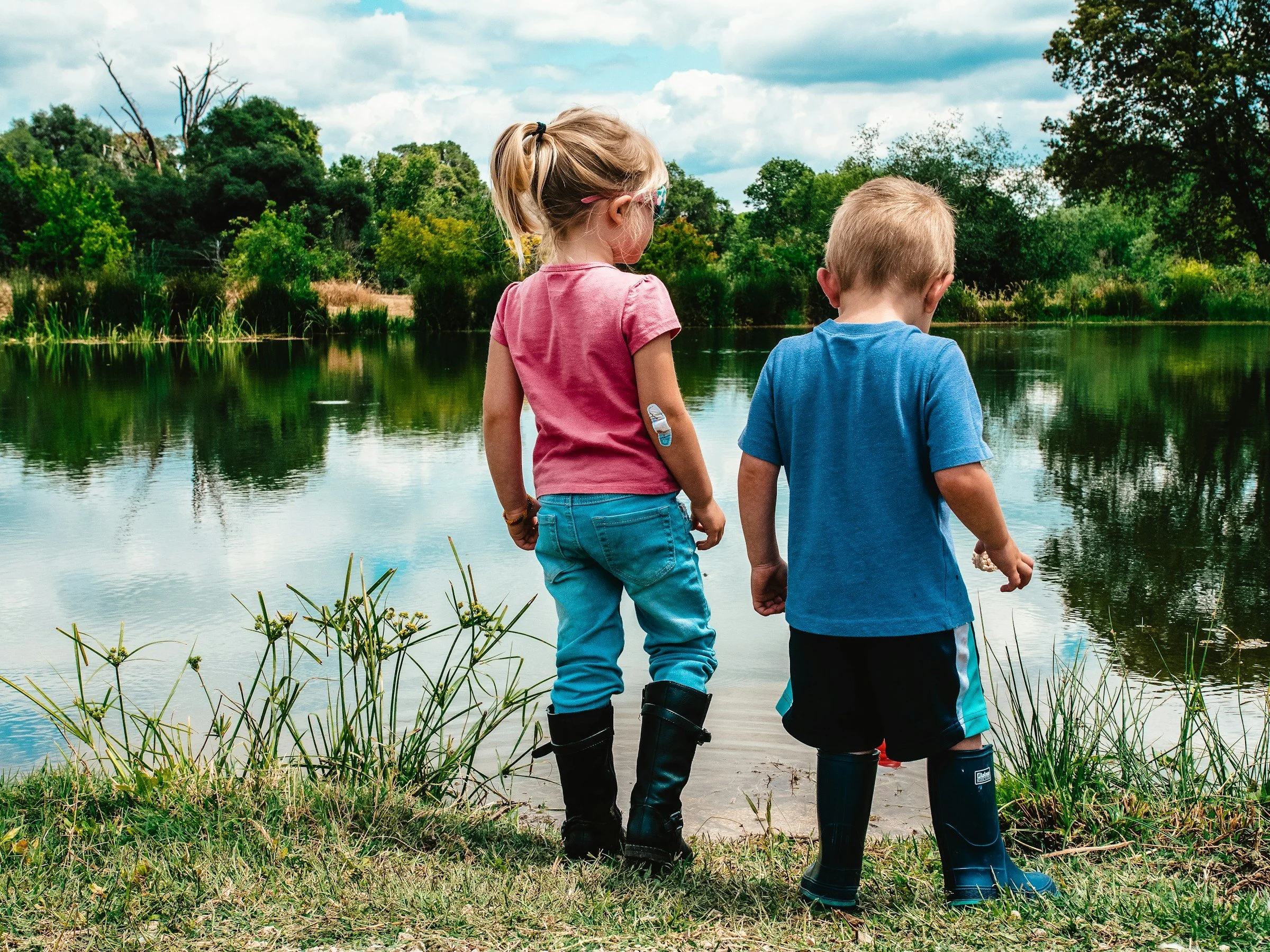
All together now: New data shows girls are as likely to be autistic as boys. Picture: Meritt Thomas/Unsplash
I don’t know whether to be pleased or furious. At last there’s research to back up what many of us thought: there are as many autistic females as males. As we suspected, the reason women and girls appeared to be in the minority is that we weren’t – and still aren’t – receiving timely diagnosis.
When researchers at the Karolinska Institutet in Sweden looked at health data of 2.7 million people born in the country between 1985 and 2020, they discovered that by 2022, 2.8 per cent had been diagnosed as autistic.
However, there was a huge sex discrepancy in the age at which this happened. Autistic boys were around three times more likely to be spotted by the time they were ten, with girls playing catch up in adolescence. By twenty, the ratio of males to females with a diagnosis was 1.2-to-1, and the authors predict this would be equal if data up to 2024 was analysed.
In the UK, female underdiagnosis is an even bigger problem. The most recent data, from a study of English diagnosis rates published in 2023, found that, by 2018, the highest rate of diagnosis – 4.4 per cent – was among 15 to 19-year-old boys, compared to just 1.37 per cent for girls in this age group.
Since the condition is largely genetic, the percentage of those in each age group should be roughly the same. In other words, at least 4.4 per cent of the entire population must be autistic, meaning millions of people – the majority women – have been overlooked.
Conditioning and bias
To many of us, the reasons are obvious. Autistic females go unnoticed for longer due to a pernicious combination of social conditioning to conceal our difference and sex bias in the diagnostic process.
The twenty-five-year-old AQ50 test used as the starting point for UK diagnosis is heavily skewed towards male presentation, and too many clinicians dismiss women seeking diagnosis on the basis of their social skills. They claim we can’t be autistic because we have a partner, can make eye contact or exhibit empathy. But that doesn’t mean we’re not.
And we’re paying the price. As Dr Judith Brown, head of evidence and research at the National Autistic Society, told The Guardian newspaper recently: ‘Misdiagnosed autistic women can develop coexisting mental health difficulties, such as anxiety and depression, as a result of a lack of support and the exhaustion of masking.’
Masking and mental health
Like many autistic women, I know only too well what she’s talking about. Last year, I took part in a doctoral research project, by Adriana Lisowski of the University of Surrey, exploring masking and mental health in autistic women.
Lisowski’s findings include that trying hard to fit in, belong or appear neurotypical is linked to higher levels of stress, anxiety and low mood, with participants characterising masking, or camouflaging, as deeply mentally, emotionally and physically exhausting.
She also reports: ‘Some participants said that after years of camouflaging, it became difficult to tell where the mask ended and their authentic self began. This often led to confusion about identity, low self-esteem and a sense of losing themselves.’
Many participants linked masking ‘to burnout, loss of everyday energy, withdrawal from social life and difficulties managing daily tasks. Some described reaching breaking points where continuing to camouflage no longer felt possible, highlighting how serious and harmful the long-term impact can be.’
Time for change
Overall, Lisowski says: ‘The study highlights the need for broader social change, including greater recognition of camouflaging, more positive and informed views of neurodivergence, and the creation of safer spaces where autistic females can explore their identities and be themselves without pressure to hide.’
She continues: ‘The findings also point to the importance of better training for healthcare professionals, so autistic females are recognised earlier, camouflaging is understood and appropriate support is offered in a timely way.’
Until the medical establishment addresses its diagnostic failings – and society as a whole faces up to and eliminates discriminatory and misogynistic attitudes – the suffering will continue for autistic women and girls.